
For most UK homeowners, the answer is straightforward: repair if the issue is isolated and the frame is structurally sound; replace if you have failed sealed units, frame rot, or multiple simultaneous faults. The decision becomes more nuanced for period sash windows, where skilled refurbishment often delivers better long-term value than full replacement.
A quick checklist to guide your first instinct:
- Repair if you have a broken sash cord, worn draught seals, a stiff or broken lock, or a single cracked pane in an otherwise sound frame
- Repair if the timber is solid and the window opens and closes without binding
- Replace if you have condensation trapped between double-glazed panes (a failed insulated glass unit, or IGU), widespread rot in the frame or sill, or persistent draughts that survive weatherproofing attempts
- Replace if you are returning to the same window for the third repair in a few years
The cost rule is the most practical economic test available: if the cumulative cost of repairs approaches 40–60% of the price of a full replacement window, replacement is usually the better long-term investment. Below that threshold, repair almost always wins on cost.
Statistic to note: Windows account for a substantial share of a home’s heat gain or loss, so the performance of your glazing has a real impact on comfort and energy bills — but that does not automatically mean replacement is the answer.
Table of Contents
- How do you know whether your windows need repair or replacement?
- What do repairs and replacements actually cost in the UK?
- When will replacing your windows actually reduce your energy bills?
- Timber, uPVC, aluminium, or composite: which material suits your home?
- Why specialist sash refurbishment often beats replacement for period homes
- What to check and what to ask before you hire anyone
- How long will the work take, and how disruptive is it?
- Maintenance tasks that extend window life and delay replacement
- What should you do next? A final recommendation for UK homeowners
- How repair versus replacement affects your insurance and resale value
- Key takeaways
- Why I always look at the timber before recommending anything else
- Sesashwindowrepair: sash refurbishment specialists in South East London
- Useful sources and further reading
How do you know whether your windows need repair or replacement?
The most reliable way to decide is a structured inspection, working from the outside in. Start with the frame and sill, then check the glass, then test the hardware. This three-point triage, frame first, glass second, hardware last, directs you to the correct fix and avoids unnecessary replacement costs.
Clear repair indicators:
- A broken or stiff sash cord (the window drops or will not stay open)
- Worn or missing weatherstripping and draught seals
- A broken lock, latch, or spiral balance
- A single cracked or broken pane in a sound frame
- Draughts around the frame that disappear when you press the sash firmly closed
- Paint-sealed sashes that will not open (a common issue in older South East London terraces)
Clear replacement indicators:
- Condensation or fogging between the panes of a double-glazed unit — this is a failed IGU seal and cannot be cleaned or dried out
- Soft, spongy, or visibly rotted timber in the frame, sill, or sash rails
- Structural movement that has racked the frame out of square, causing persistent binding
- Water ingress leaving mould on the reveal or plaster, despite resealing attempts
- Repeated repairs to the same window within a short period.
To test a window yourself: run your hand around the closed sash on a cold or windy day to feel for air movement. Check the sill and bottom rail with a screwdriver tip — sound timber resists; rotted timber gives way. Open and close the sash; it should move smoothly and stay where you leave it.
Pro Tip: Before assuming a window needs replacing because it binds or leaks, ask whether it was correctly installed in the first place. Technicians often find that apparent failure is caused by past poor installation or building settlement. A professional reset or refit can be more effective than wholesale replacement — and considerably cheaper.
What do repairs and replacements actually cost in the UK?

Knowing the ballpark figures is what makes the 40–60% rule usable. The ranges below reflect typical UK market rates; your actual cost will vary by window size, access, and condition.
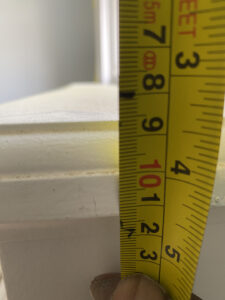
Typical UK repair costs (per window) vary depending on the repair type, including sash cord replacement, draught proofing, single-pane reglazing, IGU replacement, hardware replacement, and sill repair or partial replacement.
Typical UK full replacement costs (per window) depend on the window material, including uPVC double-glazed, timber double-glazed, aluminium double-glazed, and composite windows.
These figures illustrate why repeated small repairs add up and can eventually exceed replacement cost. A series of repairs adding up to a substantial fraction of a full timber replacement cost puts the window past the threshold where replacement is typically preferable.
Hidden and recurring costs to factor in:
- Repeat call-out fees when the same fault recurs
- Repainting timber frames every 5–8 years (£100–£300 per window depending on access)
- Temporary draught-proofing measures that need renewing annually
- Loss of energy efficiency from a poorly performing window, reflected in heating bills
The 40–60% rule in practice: if your cumulative repair spends on a single window is approaching 40–60% of the cost of replacing it, get a replacement quote before authorising the next repair.
When will replacing your windows actually reduce your energy bills?
Replacement delivers the clearest energy benefit when you are moving from single-pane to double or triple glazing, or when a failed IGU has destroyed the insulating performance of an existing double-glazed unit.

Understanding U-values: A U-value measures how quickly heat passes through a material. Lower is better. A single-pane timber window typically has a U-value around 4.8–5.0 W/m²K. A standard double-glazed unit sits around 2.8 W/m²K. A modern low-emissivity (low-E) argon-filled unit can reach 1.2–1.4 W/m²K. The difference between a failed or single-pane window and a modern unit is substantial in rooms that face north or are exposed to prevailing wind.
Condensation: what type matters
Surface condensation on the inside of the glass is usually a ventilation and humidity problem, not a window failure. Opening windows briefly, using extractor fans, and improving air circulation will address it without any glazing work.
Condensation between the panes is different. That fogging signals that the IGU’s hermetic seal has broken down, allowing moist air into the spacer cavity. The insulating gas has escaped, and the unit is now performing little better than single glazing. Replacing only the IGU in a sound frame is often possible and restores performance without changing the frame — a cost-effective middle ground.
When replacement is likely to pay back:
- You are replacing single-pane windows with modern double or triple glazing
- The existing IGU has failed and the frame is also near end of life
- The window faces north, east, or is in a room used heavily in winter
- You are combining window replacement with loft insulation or wall insulation as part of a broader upgrade
For a single failed IGU in a typical UK living room, replacing the sealed unit alone can restore meaningful thermal performance at a fraction of full replacement cost. If the frame is sound, that is usually the right call.
Timber, uPVC, aluminium, or composite: which material suits your home?
Each material involves genuine trade-offs. The right choice depends on your home’s age, planning constraints, maintenance appetite, and budget.
Timber
Pros:
- Authentic appearance, particularly for period and Victorian properties
- Original slow-growth timber is often denser and more durable than modern equivalents
- Can be repaired, reglazed, and repainted indefinitely
- Compatible with conservation area requirements and listed building consent
Cons:
- Requires regular repainting every few years
- Higher supply-and-fit cost than uPVC
- Susceptible to rot if maintenance lapses
uPVC
Pros:
- Low maintenance — no painting required
- Lowest upfront cost per window
- Good thermal performance with modern sealed units
Cons:
- Visually inappropriate for period properties; can reduce kerb appeal and harm value in conservation areas
- Cannot be repaired in the same way as timber; frame damage usually means full replacement
- Shorter lifespan than well-maintained timber
Aluminium
Pros:
- Slim sightlines suit contemporary and industrial aesthetics
- Durable and low maintenance
- Can achieve excellent U-values with thermally broken frames
Cons:
- Higher cost than uPVC
- Poor fit for traditional period properties
- Thermally broken frames are essential — standard aluminium conducts cold readily
Composite
Pros:
- Combines timber interior with aluminium or GRP exterior
- Reduced maintenance versus pure timber
- Good thermal performance
Cons:
- Premium price point
- Repair options more limited than solid timber
Secondary glazing
Secondary glazing fits an additional pane inside the existing window reveal, leaving the original frame untouched. It is particularly useful for listed buildings or conservation areas where replacing the outer window is not permitted. Thermal performance improves significantly, and acoustic insulation is often better than standard double glazing. For readers interested in solar control film as a complementary measure, window film can reduce heat gain further without structural work.
Why specialist sash refurbishment often beats replacement for period homes
Original sash windows in Victorian and Edwardian South East London properties were built from slow-growth timber — typically Baltic pine or English oak — that is denser, more stable, and more resistant to decay than most modern kiln-dried equivalents. Heritage timber can be superior in density and appearance compared with modern replacements, and careful refurbishment can return a window to service for decades with proper maintenance.
A professional sash refurbishment typically involves:
- Sash cord replacement to restore smooth, counterbalanced operation
- Draught proofing with brush-pile or compression seals fitted into routed channels in the sash and frame
- IGU replacement within the existing frame, bringing the window to modern thermal performance
- Sill repair or replacement where localised decay has occurred
- Spiral balance installation where the original cord-and-weight system is impractical
- Bespoke sash manufacture where a sash rail or full sash is beyond repair
For a typical South East London Victorian terrace, a full sash refurbishment covering draught proofing, cord replacement, and IGU upgrade can transform a draughty, rattling window into one that is warm, quiet, and smooth-running — without losing the period proportions and glazing bars that define the property’s character. Poorly matched uPVC replacements, by contrast, can reduce kerb appeal and may harm value in conservation areas. Before and after photos of completed refurbishments are available in the Sesashwindowrepair gallery, which gives a clear picture of the transformation a skilled restoration achieves.
What to check and what to ask before you hire anyone
A reliable tradesperson will welcome scrutiny. If they do not, that tells you something.
Your inspection checklist before the survey
- Frame condition: probe the bottom rail, sill, and jambs for soft spots
- Sill: check for standing water, cracked paint, or separation from the wall
- IGU: look for fogging, condensation, or discolouration between the panes
- Hardware: test every lock, latch, and stay; note anything stiff or broken
- Draughts: run your hand around the closed sash and note where air enters
- Paint and substrate: check for flaking, bare timber, or water staining
- Movement: check whether the frame is square and the sash closes flush
Questions to ask the tradesperson
- Do you provide a written survey and itemised quote before any work begins?
- Are you replacing the IGU only, or the full frame? What is the reason for that recommendation?
- What warranty do you offer on parts and workmanship, and is it in writing?
- Are you registered with FENSA or TrustMark? (FENSA registration is required for replacement glazing in England and Wales to comply with Building Regulations.)
- Can you show me before-and-after photos of similar work?
- Do you carry public liability insurance? Can I see evidence?
- Are replacement parts still available for my window type, or will you be fabricating bespoke components?
Trust signals to expect on a written quote
A trustworthy quote will include: a description of the specific work to be done, itemised pricing, a clear timescale, the warranty terms, and the tradesperson’s registration or certification details. Vague quotes with a single lump sum and no breakdown are a warning sign. Always get at least two or three quotes for any job above a few hundred pounds, and ask each tradesperson to explain their recommendation in plain terms.
How long will the work take, and how disruptive is it?
Most homeowners are pleasantly surprised by how quickly repairs are completed.
Typical timelines:
- Sash cord replacement: 1–2 hours per window; the room is usable the same day
- Draught proofing (full sash window): 2–4 hours per window; no curing time required
- IGU replacement in existing frame: 2–4 hours per window, subject to glass lead time (usually 5–10 working days to order)
- Full sash refurbishment (cord, draught proofing, IGU, hardware): typically one day per window
- Full-frame replacement (retrofit insert): half a day to one day per window
- Bespoke sash manufacture and installation: allow 3–6 weeks for timber fabrication, then one to two days on site
Factors that extend the schedule:
- Listed building consent or conservation area approval (allow 8 weeks for a decision)
- Multiple windows tackled simultaneously (reduces disruption overall but requires more planning)
- Decoration: new timber work needs priming and painting, which adds a day or two
- Weather: silicone and external paint require dry conditions above 5°C
Pro Tip: Book sash refurbishment work for spring or early autumn. Timber acclimatises better in moderate temperatures, external paint adheres well, and you avoid the peak summer and pre-Christmas booking rush. Lead times for bespoke timber sashes from specialist workshops in South East London typically run 3–5 weeks, so plan ahead if your windows need new sashes fabricated.
Maintenance tasks that extend window life and delay replacement
Good maintenance is the cheapest window upgrade available. A well-maintained timber sash window can last well over a century; a neglected one can fail within a decade.
Annual maintenance schedule
- Spring check: inspect all sash cords for fraying; test every sash for smooth operation; check draught seals for compression and continuity
- Spring check: clean and lubricate all hardware (locks, stays, spiral balances) with a light oil or dry PTFE spray
- Autumn check: inspect external paint for cracking or bare patches; touch up immediately to prevent water ingress
- Autumn check: check sill drainage — clear any debris from the sill groove and check that the drip edge is intact
- Every 5–8 years: full external repaint using a flexible, microporous paint system (Dulux Weathershield or similar) to allow the timber to breathe
Small fixes that make a real difference
- Draught proofing: fitting brush-pile or compression seals to sash channels is the single highest-impact low-cost improvement for comfort and energy performance; professional draught proofing costs a fraction of full replacement
- Sill repair: catching a small area of localised rot early with a two-part epoxy filler (Ronseal High Performance Wood Filler or similar) prevents the decay spreading to the frame; sill replacement becomes necessary only when the rot has progressed through the full section
- Reglazing single panes: a cracked pane reglazed promptly prevents water tracking into the putty bed and rotting the sash rail
- Replacing seals: silicone perimeter seals around fixed lights harden and crack over time; renewing them takes an hour and costs very little
Keep a simple maintenance log noting dates, work done, and materials used. This record supports any warranty claim and is useful evidence for insurers if you ever need to make a claim related to window condition.
What should you do next? A final recommendation for UK homeowners
The decision tree is simpler than it first appears.
Repair now if: the fault is isolated (a cord, a seal, a lock, a single pane), the frame is structurally sound, and cumulative repair costs are well below 40–60% of replacement cost.
Replace if: you have a failed IGU that cannot be replaced in the existing frame, widespread rot, structural movement, or you have already spent close to half the replacement cost on repairs to the same window.
Commission a specialist sash refurbishment assessment if: you have original timber sash windows in a period property, the frames are fundamentally sound, and you want to improve thermal performance and comfort without losing the character of the building.
Your next steps
- Run the 40–60% cost test: get a repair quote and a replacement quote for the same window, then compare
- Book a written survey with an itemised quote — never authorise work from a verbal estimate alone
- Gather two or three quotes and ask each tradesperson the checklist questions above
- Check FENSA or TrustMark registration before signing anything
- For period sash windows, ask specifically whether the IGU can be replaced within the existing frame before agreeing to full replacement
On resale and insurance: see the section below for the specific impacts of your choice on home value and cover.
How repair versus replacement affects your insurance and resale value
The choice between repair and replacement has practical consequences beyond comfort and energy bills.
Home insurance: Insurers expect windows to be maintained in good repair. A window with known rot, a failed seal, or persistent water ingress that has not been addressed may complicate a claim if water damage occurs. Keeping a maintenance log and acting on faults promptly demonstrates reasonable care. Some insurers offer a modest premium reduction for homes with modern double glazing, though the saving rarely justifies replacement on its own.
Resale value: Window replacement can add value to a home on resale, but the material and style matter as much as the upgrade itself. In conservation areas or streets of period properties, uPVC replacements can actively reduce buyer appeal and, in some cases, attract enforcement action from the local authority. Well-restored original sash windows, by contrast, are increasingly valued by buyers who understand that original slow-growth timber is superior in density and character to modern equivalents.
For listed buildings, replacing original windows without consent is a criminal offence under the Planning (Listed Buildings and Conservation Areas) Act 1990. Refurbishment is almost always the only lawful route, and a well-documented refurbishment with a specialist adds demonstrable value to the property record.
This article provides general information for homeowners and is not a substitute for professional advice. Always confirm current Building Regulations requirements, planning constraints, and insurance terms with the relevant authority or a qualified professional for your specific property.
Key takeaways
Repair is the right default for isolated faults on sound frames; replacement makes sense when the frame, IGU, or structure has failed, or when cumulative repair costs exceed 40–60% of replacement cost.
| Point | Details |
|---|---|
| Use the 40–60% rule | If cumulative repairs approach 40–60% of replacement cost, replacement is usually the better investment. |
| Repair isolated faults first | Broken sash cords, worn seals, and hardware failures are repair jobs — not reasons to replace the whole window. |
| Failed IGU means action | Condensation between panes signals a failed sealed unit; replacing the IGU alone is often possible if the frame is sound. |
| Period timber deserves refurbishment | Original slow-growth timber sash windows are often denser than modern equivalents; skilled restoration preserves character and value. |
| Sesashwindowrepair for South East London sashes | Sesashwindowrepair offers full sash refurbishment, draught proofing, cord repair, sill replacement, and bespoke sash manufacture across South East London. |
Why I always look at the timber before recommending anything else
Most homeowners who contact us are convinced they need new windows. By the time we have completed the survey, a significant proportion of them do not — at least not in the way they imagined.
The pattern repeats itself across South East London: a Victorian or Edwardian sash that rattles, lets in cold air, and has a sill that looks tired. The homeowner has been quoted for full uPVC replacement and is ready to proceed. We open the sash, probe the frame, and find timber that is fundamentally sound — dense, stable, and repairable. The rattling is a worn draught seal and a frayed sash cord. The cold is a failed IGU. The sill has a patch of surface rot that an epoxy repair will fix in an afternoon.
The honest answer in those cases is refurbishment, not replacement. A full sash refurbishment, covering new cords, draught proofing, an IGU swap, and a sill repair, costs a fraction of full replacement and leaves the homeowner with a window that performs well, looks right, and will last another generation with normal maintenance. Replacing it with uPVC would have cost more, looked wrong, and destroyed something that cannot be replicated.
The windows that genuinely need replacing are the ones with frames that have rotted through, structural movement that has racked the box out of square, or repeated failures that no single repair has resolved. Those cases are real, and we say so plainly. But they are less common than the replacement industry’s marketing suggests.
Sesashwindowrepair: sash refurbishment specialists in South East London
If your windows are period timber sashes and you are weighing up whether to repair or replace, a professional survey from a specialist who works exclusively with timber sash windows is worth far more than a generic glazing quote.
Sesashwindowrepair covers the full range of sash window work across South East London: full sash window refurbishments, sash cord repair, draught proofing, sill replacement, spiral balance installation, IGU replacement within existing frames, and bespoke sash manufacture for windows where a sash or rail is beyond repair. Every job comes with a written survey, itemised pricing, and a workmanship guarantee. We carry public liability insurance and work to the standards expected of TrustMark-registered tradespeople.
To see the quality of our work before you commit, browse the before-and-after gallery and judge for yourself. When you are ready, get in touch to book a written survey — no pressure, no obligation, just a clear assessment of what your windows need and what it will cost.
Useful sources and further reading
A short list of reliable references for homeowners who want to go deeper on any of the topics covered above.
- ENERGY STAR — Is it time to replace your windows? — A practical checklist of replacement indicators from the US energy efficiency programme; the performance principles apply equally to UK homes, though incentive schemes differ.
- Consumer Reports — When to repair and when to replace your windows — Balanced guidance on weighing repair against replacement, with useful context on payback periods and energy savings.
- Clean Energy Connection — Should you replace your windows? — Clear explanation of when replacement is and is not worth the investment, including the case for other energy upgrades first.
- BFRC (British Fenestration Rating Council) — The UK body responsible for the Window Energy Rating scheme; use it to check ratings and verify FENSA-registered installers.
- Glass Doctor — Window repair and replacement — Practical explanation of IGU failure, fogging, and when sealed unit replacement is possible without changing the frame.
- Reimagine Roofing — Windows repair vs replace decision guide — Source of the 40–60% cost rule of thumb used throughout this article.