
Double glazing in listed buildings: what you need to know
Standard double glazing is almost never acceptable in a listed building. The realistic options for most South East London homeowners are secondary glazing, slim-profile sealed units (subject to listed building consent), or a repair-and-draught-proofing programme. Under the Planning (Listed Buildings and Conservation Areas) Act 1990, any alteration affecting a building’s special architectural or historic interest requires formal consent from your local planning authority. Historic England’s guidance reinforces this: the starting point is always repair, not replacement. At Sesashwindowrepair, we work with South East London homeowners on exactly these decisions every week.
Before you go any further, check these three things:
- Confirm your listing grade (Grade I, II* or II) and whether your windows are identified as contributing to the building’s special interest.
- Contact your local conservation officer for pre-application advice before ordering anything.
- Book a site survey with a heritage-experienced joiner who can produce a photographic condition report and measured drawings.
Table of Contents
- Why double glazing rules matter in listed buildings
- What actually works instead of standard double glazing
- When can conservation officers accept slim or heritage double glazing?
- How to apply for listed building consent
- How to choose a specialist for listed-building sash work
- Typical costs and project timescales
- How Sesashwindowrepair works across South East London
- Key takeaways
- A conservation-first approach always pays off
- Sesashwindowrepair: heritage surveys and bespoke sash work in South East London
- Authoritative sources and further reading
Why double glazing rules matter in listed buildings
Changes to windows are rarely cosmetic. In a listed building, the glazing bars, sash profiles, and original glass are part of the fabric that earned the listing in the first place. Altering them without consent is a criminal offence under the 1990 Act, carrying an unlimited fine and up to two years’ imprisonment.
“In historic buildings, there should be a strong preference for repair rather than replacement as the use of double glazing can lead to a loss of historic fabric. Adding secondary glazing would often be the preferred option.”
— Historic England, secondary glazing guidance
Historic England’s whole-building approach frames energy upgrades as an integrated package: draught-proofing, reinstating shutters, and secondary glazing first. Wholesale window replacement is a last resort, not a starting point. Conservation officers across South East London apply this principle consistently.
If unauthorised work proceeds, the local authority can serve an enforcement notice requiring full reinstatement at the owner’s cost. That risk alone makes pre-application advice worth every penny.
What actually works instead of standard double glazing
Standard 24mm units with aluminium spacer bars almost always fail conservation tests because they alter sightlines, increase glazing-bar depth, and change the reflective quality of the glass. Three alternatives are consistently accepted.

| Method | Centre-pane U-value | Visual impact | Typical installed cost |
|---|---|---|---|
| Repair + draught-proofing | — | None | — |
| Secondary glazing | 1.6–2.0 W/m²K | Minimal (internal only) | — |
| Slim-profile sealed units | 1.8–2.2 W/m²K | Low if matched correctly | — |
Secondary glazing
- Pros: reversible, usually requires no listed building consent, excellent acoustic performance, cost-effective, achieves centre-pane U-values around 1.6–2.0 W/m²K.
- Cons: requires cleaning two surfaces, visible internally.
Slim-profile sealed units (10–14mm)
- Pros: genuine thermal improvement (centre-pane U-value 1.8–2.2 W/m²K), invisible externally when matched well.
- Cons: requires listed building consent, more expensive, seal longevity uncertain.
Repair, draught-proofing and shutters
- Pros: preserves original fabric entirely, lowest cost, conservation officers always approve.
- Cons: smaller thermal gain than glazing options.
Pro Tip: A draught-proofing service combined with reinstated shutters can deliver comfort gains comparable to slim-profile units at a fraction of the cost, and with zero consent risk. Consider this route before committing to glazing work.
Historic Scotland’s Changeworks pilot found that some gas-filled slim units showed marginal seal deterioration after two years, while air or vacuum units held steady. Treat slim-profile glazing as a comfort and heritage investment, not a fast financial payback. Payback periods can be very long depending on usage and fuel prices.
When can conservation officers accept slim or heritage double glazing?
Slim-profile units are only considered when they can be installed without harming the building’s special interest. The Rutland County design guidance is clear: replacement is acceptable only where windows are non-historic, irreparable, or have already been replaced since listing.
A conservation officer will typically look for:
- Rebate depth of at least 12mm to accommodate the unit without altering the frame profile.
- Integral glazing bars (not surface-applied bars over a single large pane).
- Spacer bars colour-matched to the window frame so they disappear visually.
- Reuse of surviving original glass where possible.
- Ultra-slimline units (10–11mm) for narrow-bar sashes where standard slimline would require bar widening.
- No visible trickle vents or rubber seals on the external face.
- A heritage statement confirming the window’s age, significance, and condition.
Where original windows have been inappropriately replaced with uPVC in the past, it is usually acceptable to reinstate well-designed slimline double-glazed timber windows that more closely replicate the original.
How to apply for listed building consent
You must obtain listed building consent before touching the windows. Applications are free for householder works in England, and decisions normally take up to eight weeks. For Grade I and Grade II* buildings, Historic England may be consulted directly, which can extend the timeline.
- Prepare a heritage statement identifying the window’s age, significance, and current condition.
- Commission large-scale section drawings showing existing and proposed glazing bar profiles, rebate depths, and unit thickness.
- Compile a photographic condition report documenting every window on the elevation.
- Write a specification for the proposed glazing product, including unit dimensions, spacer bar colour, and glazing bar profiles.
- Include installer details and, where possible, a sample panel or mock-up for the officer to inspect.
- Submit through the Planning Portal to your local authority (Lewisham, Southwark, Greenwich, Bromley, or whichever borough applies).
Pro Tip: Most South East London boroughs offer pre-application advice for a modest fee. Use it. An officer who has seen your drawings before submission is far more likely to approve them, and you avoid the cost of a refusal and resubmission.
Consent may carry conditions: a specific approved product, a requirement for sample panels, or a named installer. Build those conditions into your contract before work starts.
How to choose a specialist for listed-building sash work
The right specialist demonstrates conservation experience before you sign anything. A site survey with a photographic condition report is the minimum standard. Anyone who quotes from photographs alone is not the right choice for a listed property.
Ask these questions:
- Can you show examples of listed-building projects in South East London, with before-and-after photographs?
- Do you produce large-scale section drawings and sample panels for conservation officer review?
- What guarantee do you offer on slim-unit seals, and what does your maintenance plan cover?
- Are you familiar with the consent conditions that local boroughs typically impose?
- Do you carry adequate public liability and professional indemnity insurance?
Pro Tip: Ask to see the joinery workshop or workshop photographs. Bespoke glazing-bar profiles for a Grade II sash cannot be sourced off the shelf. A specialist with in-house or closely partnered joinery capability will match your sightlines accurately; a general glazing firm almost certainly will not.
Browse the sash window gallery to see the standard of finish and profile-matching you should expect from any specialist you consider.
Typical costs and project timescales
Costs vary considerably depending on the method chosen, the condition of existing frames, and whether listed building consent is needed.
| Method | Centre-pane U-value | Typical installed cost | Likely project timeline |
|---|---|---|---|
| Draught-proofing + repair | — | — | 1–3 weeks |
| Secondary glazing | 1.6–2.0 W/m²K | — | 2–4 weeks |
| Slim-profile sealed units | 1.8–2.2 W/m²K | — | 3–5 months |
| Bespoke timber replica windows | — | — | 4–6 months |
Variables that move the price significantly:
- Rebate depth: shallow rebates require frame modification, adding cost and complexity.
- Repair work needed before glazing (sill replacement, sash cord repairs, rot treatment).
- Listed building consent application and pre-application advice fees.
- Manufacture lead times for bespoke joinery, particularly narrow-bar sashes.
For slim-profile units, the timeline includes survey, specification, LBC decision (up to eight weeks), manufacture, and installation. Secondary glazing can often be completed within weeks of a survey, with no consent delay.
Maintenance matters too. Slim-unit seals should be inspected annually; failed seals cause misting and reduce thermal performance. Budget for periodic resealing or unit replacement over the life of the installation.
How Sesashwindowrepair works across South East London
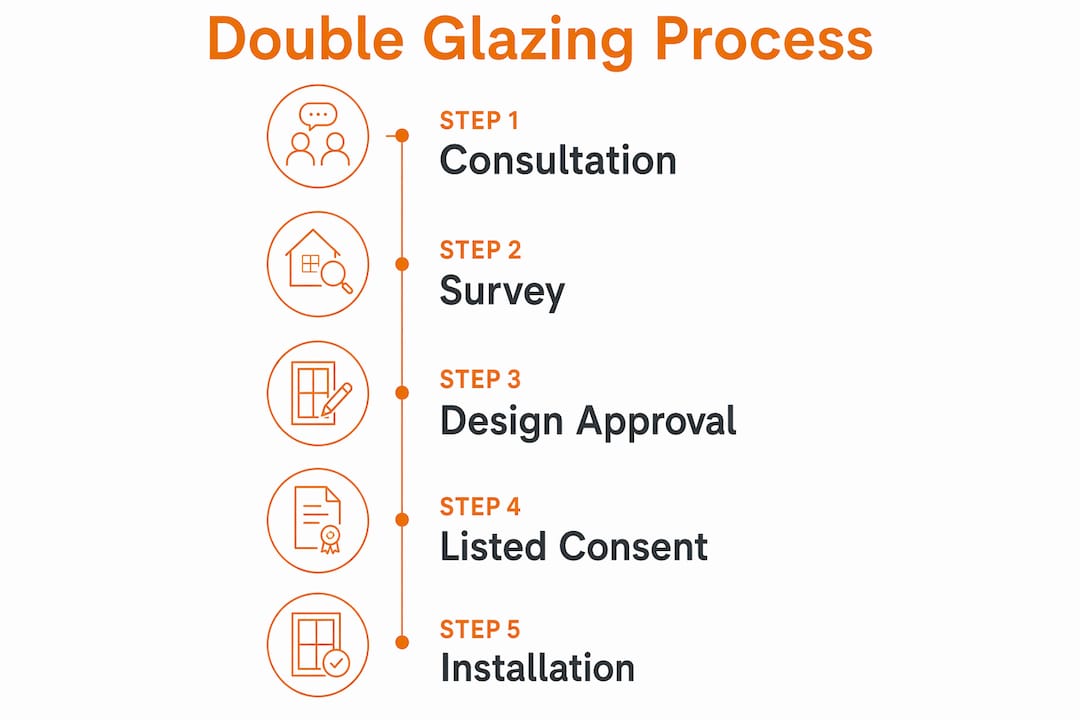
A proper service starts before any glazing decision is made. We begin every project with a site survey and photographic condition report, assessing each window’s significance, rebate depth, glazing bar profiles, and overall condition.
- Initial survey: we visit the property, photograph every window, and assess which are historic, which have been replaced, and what condition the frames and sills are in.
- Measured drawings and specification: we produce large-scale section drawings and a full glazing specification suitable for submission with a listed building consent application.
- Consent support: we work alongside your conservation officer, providing sample panels and attending pre-application meetings where required.
- Bespoke joinery manufacture: where replacement is unavoidable, we manufacture replacement sashes to match original sightlines and glazing bar profiles precisely, using timber matched to the existing frames.
- Installation and aftercare: we install to the conditions of consent and provide a written maintenance plan covering seal inspection, draught-proofing upkeep, and sash cord checks.
Our sash window refurbishments service covers the full range, from draught-proofing and sash cord repairs through to bespoke slim-profile glazing and full timber replica windows, all within South East London.
Key takeaways
Standard double glazing is almost never permitted in a listed building; secondary glazing or slim-profile sealed units, obtained with listed building consent, are the realistic routes for most South East London homeowners.
| Point | Details |
|---|---|
| Standard double glazing is refused | 24mm units alter sightlines and reflective qualities; conservation officers will not approve them for historic windows. |
| Secondary glazing is the safest route | It usually requires no listed building consent, performs at a centre-pane U-value of 1.6–2.0 W/m²K, and performs comparably to slim-profile units. |
| Consent is a legal requirement | Apply before any work starts; decisions take up to eight weeks and refusal carries enforcement risk. |
| Slim units need precise matching | Rebate depth, integral glazing bars, and colour-matched spacers are all conditions conservation officers impose. |
| Sesashwindowrepair | Offers heritage surveys, photographic condition reports, and bespoke timber manufacture across South East London. |
A conservation-first approach always pays off
The homeowners who get the best results are those who treat their listed windows as an asset, not a problem. Repair-first thinking, backed by a thorough survey, almost always produces a warmer, quieter home without the cost and delay of a contested consent application.
On site, we regularly find that windows described as “beyond repair” simply need new sash cords, a round of draught-proofing, and a fresh coat of paint. The thermal improvement from those measures alone is significant, and the conservation officer never needs to be involved. Where slim-profile glazing genuinely is the right answer, we specify it carefully and support the consent process from start to finish.
Guarantees matter here. We provide written terms on seal longevity for slim units and schedule follow-up inspections as part of every installation. Conservation conditions are not a bureaucratic inconvenience; they are the framework that keeps your property’s value and character intact.
Sesashwindowrepair: heritage surveys and bespoke sash work in South East London
Timber Sash Window Repair SE, offers something specific to listed-building homeowners in South East London: a conservation-aware survey, a photographic condition report, and the in-house joinery capability to manufacture bespoke sashes that match your original glazing bars and sightlines exactly. That combination means you get honest advice about whether slim-profile glazing, secondary glazing, or a repair programme is the right answer for your property, before you spend a penny on materials.
We handle listed building consent support, produce the drawings and specifications your conservation officer needs, and carry out installation to the conditions of approval. View our before-and-after gallery to see the quality of finish we deliver on South East London period properties. To book a site survey or get free initial advice, visit our sash window refurbishments page or get in touch directly.
Authoritative sources and further reading
The sources below are the primary references for the guidance in this article. Consult them in the order most relevant to your situation.
- Historic England: Adapting Historic Buildings for a Low Carbon Future (Advice Note 18) — start here for the whole-building approach and the rationale behind repair-first decisions.
- Historic England: Secondary Glazing for Windows — detailed technical guidance on secondary glazing as the preferred conservation option, including U-value context.
- Chelmsford City Council: Double Glazing in Listed Buildings — practical guidance note on what conservation officers require, including section drawings and heritage statements.
- Rutland County Council: Design Guidance for the Repair and Replacement of Windows in Listed Buildings — use for understanding what precise replication of sightlines and profiles means in practice.
- Energy Saving Trust: Windows and Doors — independent advice on secondary glazing performance and heat-loss reduction.
- Historic Scotland / Changeworks: Slim-Profile Double Glazing in Listed Buildings — the most rigorous in-situ thermal performance data available for slim-profile units, including seal durability findings.
- GOV.UK: Adapting Historic Homes for Energy Efficiency — the government’s review of planning barriers for listed-building energy upgrades, useful for understanding the consent framework.
Recommended
- Refurbishment Specialists – Timber Sash Window Repair SE
- sash window refurbishments – Timber Sash Window Repair SE
- Replacement Sash – Timber Sash Window Repair SE
- Sill Replacement – Timber Sash Window Repair SE