
Do you need planning permission for windows in a London conservation area?
The short answer is: usually yes, unless the work is genuinely like-for-like. Replacing sash windows in a London conservation area typically does not require planning permission when you swap timber for identical timber, matching the original style, profile, and dimensions. The moment you change material, glazing pattern, or opening style, you will almost certainly need a formal application.
Key points to understand before you start:
- Like-for-like timber replacements are generally exempt from planning permission under permitted development rights.
- Article 4 Directions remove those permitted development rights in many London conservation areas, meaning even sympathetic replacements require a formal application.
- Listed buildings require Listed Building Consent in addition to, or instead of, standard planning permission. This is a stricter, separate process.
- Timber frames are the expected material; uPVC and aluminium are routinely refused without compelling justification.
- Non-compliance can result in enforcement notices, fines, and a requirement to reinstate original windows at your own cost.
Table of Contents
- Understanding conservation areas and planning permissions in London
- What are the key rules for window replacement in conservation areas?
- Restoring versus replacing: what works best for heritage windows?
- Trusted local specialists for heritage windows in London
- How to navigate the planning application process successfully
- Sesashwindowrepair: sash window specialists in South East London
- Key takeaways
Understanding conservation areas and planning permissions in London
A conservation area is a designated zone where the local planning authority considers the character and appearance of the built environment to be worth preserving or enhancing. London has hundreds of them, covering Victorian terraces, Georgian squares, Edwardian suburbs, and everything in between. Your local council, whether that is Islington, Wandsworth, Southwark, or any other London borough, is responsible for designating and managing these areas.
Within a conservation area, your permitted development rights still apply in principle, but they are frequently curtailed. Article 4 Directions are the mechanism councils use to remove those rights, making window replacements subject to formal planning applications even for single-family houses. Flats and properties converted from houses have no permitted development rights for window changes regardless of Article 4, so planning permission is always required.
Listed building status adds another layer. A Grade I or Grade II listed property sits within a separate legislative framework under the Planning (Listed Buildings and Conservation Areas) Act 1990. Listed Building Consent is required for any alteration that affects the building’s special interest, and that includes windows. You can check whether your property is listed via Historic England’s National Heritage List for England, and confirm conservation area boundaries using your borough’s interactive planning map.
What are the key rules for window replacement in conservation areas?
Getting this right from the outset saves time, money, and the stress of an enforcement notice. The rules are not arbitrary; they exist to protect the streetscape character that makes London’s historic neighbourhoods worth living in.
- Timber is the default material. Timber windows maintain heritage character and meet conservation regulations. uPVC or aluminium replacements are generally refused on front elevations without strong justification.
- Match the original design precisely. Glazing bar profiles, sash dimensions, moulding details, and the way the window opens must replicate the historic original.
- Double glazing is possible but must be slimline. Standard double-glazed units are too thick for most historic timber frames. Slimline units can be retrofitted without altering the frame’s appearance.
- Rear elevations may allow more flexibility, but this varies by borough and by the specific conservation area appraisal.
- Secondary glazing (a separate inner frame) does not require planning permission and is often the most straightforward route to improved thermal performance.
Pro Tip: Contact your local conservation officer before submitting any application or instructing a contractor. A brief pre-application conversation can clarify exactly what is acceptable, saving you weeks of delay and the cost of a refused application.
Restoring versus replacing: what works best for heritage windows?
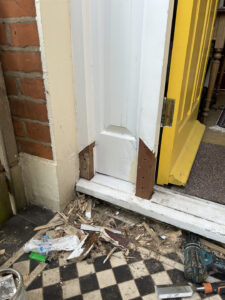
Restoration is almost always the conservation officer’s preferred outcome. Retaining original fabric, the actual timber, glass, and ironmongery, carries more weight in a planning assessment than even the most sympathetic replacement. Slimline double glazing retrofitted into existing timber frames is regularly approved precisely because it preserves the original structure while improving thermal performance.
Common restoration methods include:
- Sash cord replacement to restore smooth operation on box sash windows.
- Timber repairs using epoxy consolidants and fillers to address rot without removing original material.
- Draught proofing with brush-pile or compression seals, which can dramatically reduce heat loss without any planning permission.
- Retrofitting slimline double-glazed units into existing sashes, preserving the frame and profile.
When full replacement is unavoidable, a physical survey measuring frame sections and glazing bar profiles at multiple points is mandatory. Historic London buildings rarely have perfectly square openings, and bespoke manufacturing to exact measurements is the only way to achieve a convincing match.
Restoring windows and retrofitting slimline double glazing maintain heritage appeal better and carry a higher chance of planning approval than full replacements. Conservation officers prioritise the preservation of original elements wherever possible, and a well-executed restoration will almost always be viewed more favourably than a new window, however accurate the copy.
Trusted local specialists for heritage windows in London
Choosing a contractor with genuine conservation area experience makes a real difference to both the quality of the work and the success of any planning application. The specialists below are established London businesses with relevant expertise.
| Specialist | Specialisation & conservation experience | Services | Certifications & guarantees | Customer reputation | Pricing |
|---|---|---|---|---|---|
| Wandsworth Sash Windows’ Showroom | Sash window specialists with conservation area knowledge | Repair, restoration, bespoke manufacture | Not publicly listed | Established London presence | Not publicly listed |
| Sash Windows London | Bespoke timber sash windows combining heritage values with modern design | Bespoke timber sash windows and doors | Not publicly listed | Heritage-focused positioning | Not publicly listed |
| Timber Sash Window Repair SE | Sash window refurbishment and restoration specialists with listed building experience | Restoration, repair, draught proofing, sash cord repair, sash window sill replacement, bespoke joinery, window manufacture | Not publicly listed | Strong trust credentials | Publicly listed |
| Refurb-a-Sash Ltd Sash Windows London | Sash window restoration and refurbishment | Restoration, repair, draught proofing | Not publicly listed | Restoration-focused | Not publicly listed |
| The London Sash Window Company | Conservation area and listed building experience | Bespoke manufacture, installation, repairs | Free quote available | Period property specialists | Free quote |
| Sash Carpentry Ltd | Family-run, no subcontracting, in-house craftsmen | Installation, restoration, repair, casements, timber doors | Not publicly listed | Skilled in-house team | Not publicly listed |
| Core Sash Windows | Traditional craftsmanship, listed building experience | Sash windows, casements, shutters, doors | FENSA approved, Which? Trusted Trader, GGFi member, insurance-backed guarantees, featured in House & Garden’s The List | Strong independent recognition | Not publicly listed |
| The Window Restorer | Specialist window restoration | Restoration, repair, retrofitting | Not publicly listed | Restoration specialism | Not publicly listed |
| LDN Sash Window Company | Conservation area sensitive replacements, locally made hardwood sash windows | Replacement, refurbishment, cords and weights, casements | FENSA registered, insurance-backed guarantee | Conservation-appropriate focus | guarantee included |
When assessing any specialist, ask specifically about their experience with your borough’s conservation officer, whether they can prepare or assist with a Heritage Statement, and whether their work is FENSA registered or covered by an insurance-backed guarantee.
How to navigate the planning application process successfully
A well-prepared application is far more likely to succeed than a generic one. Each application is assessed individually; a neighbour’s approved replacement does not guarantee the same outcome for your property.
Step 1: Confirm your status. Check whether your property is in a conservation area and whether an Article 4 Direction applies. Your borough’s planning portal will confirm both.
Step 2: Commission a physical survey. Measure frame sections, glazing bar profiles, and opening dimensions at multiple points. Non-square openings are common in historic London buildings and require bespoke solutions.
Step 3: Prepare a Heritage Statement. This is typically required and must explain the significance and conservation relevance of the proposed work, not merely its technical specification. It should demonstrate how the changes preserve or enhance the building’s special character.
Step 4: Engage the conservation officer early. Pre-application advice is available from most London boroughs, often for a modest fee. It is almost always worth it.
Step 5: Submit and respond constructively. Standard householder planning applications typically take eight weeks. If the officer requests amendments, respond promptly with revised drawings or additional justification.
Regarding energy efficiency: Building Regulations Part L thermal requirements often apply more flexibly to historic conservation buildings, prioritising aesthetic authenticity over strict energy ratings. Secondary glazing and draught proofing are typically acceptable routes to improved performance without triggering the full thermal compliance regime.
Non-compliance carries real consequences. Carrying out unauthorised works can result in an enforcement notice requiring you to reinstate the original windows, a planning contravention notice, and in serious cases, prosecution. There is no time limit on enforcement action in conservation areas for works that required but did not receive consent.
Sesashwindowrepair: sash window specialists in South East London
If your property is in South East London and you need a specialist who understands conservation area requirements from the ground up, Sesashwindowrepair is the practical choice. We work exclusively on timber sash windows, which means every job we take on is the kind of work conservation officers expect to see: careful, material-appropriate, and built to last.
Our services cover the full range of what conservation area homeowners typically need: sash window refurbishments, sash cord repairs, window sill replacements, draught proofing, spiral balance repairs, and bespoke timber window manufacture. We do not push unnecessary replacements. If a window can be restored, we will restore it, which is exactly the outcome your conservation officer wants to see. Get in touch for a quote and let us assess what your windows genuinely need.
Key takeaways
Replacing or restoring windows in a London conservation area requires planning permission in most cases, and timber remains the only reliably accepted material for heritage properties.
| Point | Details |
|---|---|
| Planning permission rules | Like-for-like timber replacements may be exempt, but Article 4 Directions remove this right across many London conservation areas. |
| Listed buildings | Listed Building Consent is required separately from planning permission and applies to any alteration affecting the building’s special interest. |
| Restoration over replacement | Retrofitting slimline double glazing into existing timber frames is more likely to gain approval than full window replacement. |
| Heritage Statement | A Heritage Statement explaining conservation significance is typically required as part of a planning application. |
| Sesashwindowrepair | Specialist sash window refurbishment, repair, and bespoke manufacture for South East London conservation area properties. |
Recommended
- Refurbishment Specialists – Timber Sash Window Repair SE
- sash window refurbishments – Timber Sash Window Repair SE
- Sash Window Gallery – Timber Sash Window Repair SE
- Fire Door Installation – Timber Sash Window Repair SE
Article by Timber Sash Window Repair SEhttps://sesashwindowrepair.com/