
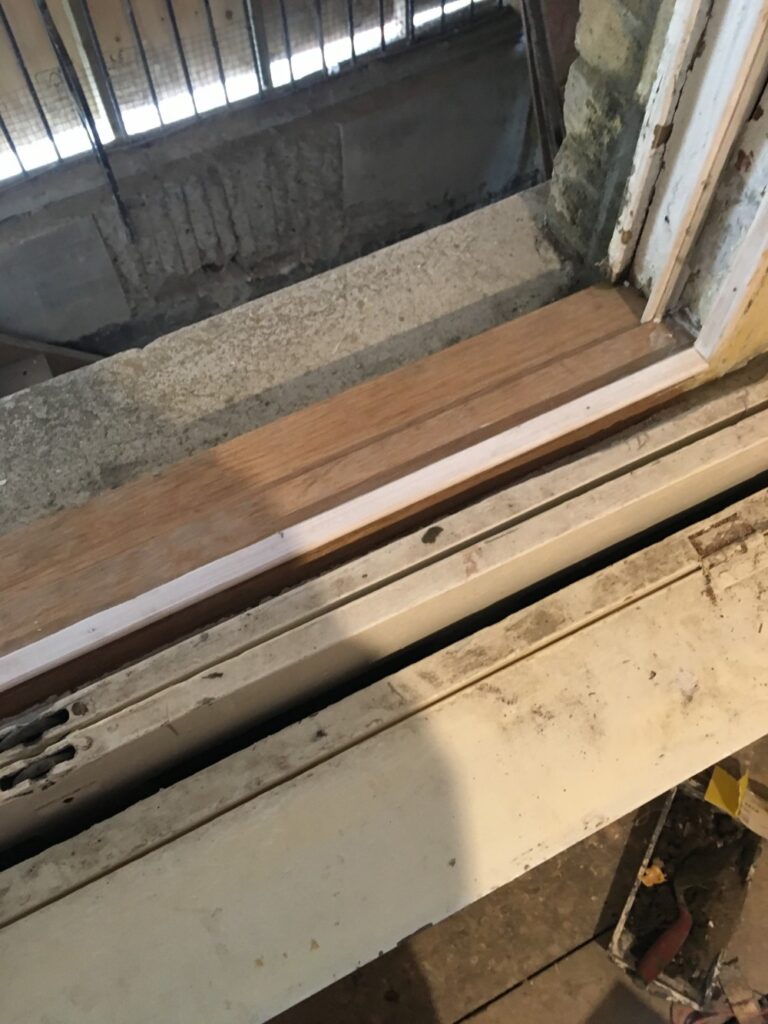
Sash Window Sill Replacement & Splice Repair
Sash window sill replacement and repair service in South East London. Does your sash window sill need replacing or beyond repair? We can carefully remove the damaged timber and install a new hardwood sill that matches the original window profile. For less severe decay, a timber splice repair restores the sill’s strength without the cost of a full replacement.
We’ll always recommend the option that genuinely suits your window, not whichever costs more.
Prices for hardwood sash window sill replacements start at £200 for the average sized window. Splice repairs typically cost less, because we cut out and replace only the decayed section of timber, rather than the entire sill.
The final cost will depend on:
- The extent of timber rot or decay
- Window size and accessibility
- Hardwood sill size and profile
- Painting and finishing requirements
- Listed building or conservation area regulations
- Any additional sash window repairs required
A rotten/ decayed sash window sill can lead to water leaks, draughts and further structural damage if left untreated. Our professional sash window sill replacement and splice repair service restores the strength, appearance, and weather resistance of your sash windows. It also preserves the original character of your property.
Timber Splice Repair or Full Sill Replacement — Which Do You Need?
Not every damaged sill needs replacing entirely. A good sash window specialist should tell you that honestly, rather than defaulting to the more expensive job. Here’s how we assess it:
Splice repair is usually the right choice when:
- Decay is localised to one section of the sill: typically the outer edge, where rainwater sits and drains the most.
- Less than around a third of the sill’s length or depth is affected.
- The rest of the box frame is still structurally sound.
Full sill replacement is usually necessary when:
- Rot has spread along most or all of the sill’s length.
- The timber has lost structural integrity and can no longer support the sash weight or box frame.
- There’s significant insect damage; wet rot and dry rot both compromise the wood differently and need different treatment.
- Previous repairs have already used up much of the original sill’s sound timber.
During our free inspection, we probe the timber with a bradawl and check for moisture. This helps us map exactly how far the decay has travelled before we recommend either option, so you’re never paying for more work than the window actually needs.
How We Carry Out a Splice Repair
A halved lap splice joint repair is sometimes called a “scarf repair” or “spliced-in repair”. This traditional joinery technique has been used for well over a century, and it’s still the most effective way to fix localised sill rot without disturbing the whole box frame.
Cutting back to sound timber: we remove the decayed section using a splayed or scarf cut, angled so the new and old timber overlap rather than butt together. This overlap is what gives a splice repair its strength; a simple square joint would fail far sooner.
Shaping the new timber section: We cut and prepare a matching piece of hardwood that replicates the original sill’s throat, weathering groove, and drip detail. This allows water to flow away from the frame, exactly as the original design intended.
Bonding the joint: Depending on the exposure and load at that point in the sill, we use either a marine-grade structural adhesive or a two-part epoxy resin system for repairs closer to a butt joint. On load-bearing sections, we sometimes reinforce this with stainless steel dowels or threaded rod for extra strength.
Finishing: We plane the repair flush, then prime and paint it to match, so it’s invisible from the outside once finished.
Because we replace only the damaged section, splice repairs are quicker to carry out, less disruptive, and more cost-effective. They remain a permanent, structural repair rather than a temporary fix.
How We Carry Out a Full Sill Replacement
When the whole sill needs replacing, the process is more involved but follows the same principle of preserving as much of the original window as possible:
- We carefully support the sash and box frame, then remove the old sill in sections. This avoids damaging the surrounding brickwork, the external stone or brick sill beneath the timber, or the plaster reveals.
- We take a template or profile gauge from the original sill, or from a matching undamaged window elsewhere on the property. This ensures the replacement matches the property’s original joinery exactly. This is important for period and listed properties.
- We cut the new sill from solid hardwood, incorporating the correct throat groove and weathering angle to direct rainwater away from the wall.
- We bed, fix, and seal the new sill against the brickwork or stonework beneath, then integrate it back with the box frame.
- We re-hang the window, if needed, and prime and finish the new timber to match the rest of the window.
Why Hardwood, and Which Species We Use
Builders often used softwood historically because it was cheap and readily available. But it’s rarely the right choice for a sill — the part of the window most exposed to standing water and weathering. We use hardwood for all our sill repairs and replacements, typically selecting from:
Oak — dense, durable, and traditionally used in higher-end period properties; performs well against rot but can be more expensive and requires careful priming as it’s naturally acidic and can corrode untreated fixings.
Sapele — a strong, stable alternative to oak with a similar attractive grain, good weathering performance, and typically more cost-effective.
Meranti — widely used for modern high-quality sill and window joinery, offering a good balance of durability, workability, and cost.
We’ll talk you through which species suits your budget, your property’s period, and the sill’s exposure to the elements before starting any work.
Signs Your Sash Window Sill Needs Attention
Catching sill decay early determines whether you need a small splice repair or a full replacement. It’s worth checking your windows periodically for:
- Soft or spongy timber when pressed with a fingertip or screwdriver
- Peeling, bubbling, or flaking paint, especially along the underside edge
- Water staining or damp patches on the wall beneath the window, inside or out
- Draughts felt directly at sill level rather than around the sashes themselves
- Visible cracking, splitting, or separation at the joints
- A musty smell in the room, which can indicate hidden fungal decay behind the paintwork
Preventing Future Sill Decay
Once your sill has been repaired or replaced, a little maintenance goes a long way toward avoiding a repeat repair in a few years:
- Repaint every 4–6 years, or sooner if you notice cracking. Paint is the sill’s primary defence against water ingress — once it fails, moisture gets straight into the end grain.
- Keep the weathering groove and drip channel clear of dirt, moss, and old paint build-up so rainwater sheds away from the frame rather than pooling.
- Check the seal between the sill and the brickwork or stonework beneath it. A failed mastic seal is one of the most common causes of hidden rot, since water can track in from below where it isn’t visible.
- Address peeling paint promptly rather than simply repainting over it. Trapped moisture underneath will continue to cause decay, even after you apply a fresh coat.
Types of Windows We Work On
- Victorian sash windows
- Georgian box sash windows
- Edwardian sash windows
- Listed buildings
- Conservation area properties
- Traditional timber windows of any period
Frequently Asked Questions
Can a rotten sill always be repaired, or does it sometimes need full replacement?
It depends on how far the decay has spread. If it’s contained to one section, a splice repair is usually possible and preferable. If rot has travelled along most of the sill’s length or compromised the joints, full replacement is the safer long-term option.
It depends on how far the decay has spread. If it’s contained to one section, a splice repair is usually possible and preferable. If rot has travelled along most of the sill’s length or compromised the joints, full replacement is the safer long-term option.
How long does a sill splice repair take?
We complete most splice repairs within a day.
We complete most splice repairs within a day.
Will a splice repair be as strong as the original sill?
Yes: a correctly executed scarf joint, properly bonded, is a permanent structural repair, not a temporary patch.
Yes: a correctly executed scarf joint, properly bonded, is a permanent structural repair, not a temporary patch.
Do I need planning permission or listed building consent for sill repairs?
Like-for-like repairs generally don’t require consent. Full replacements on listed buildings or in conservation areas may need approval, depending on the materials and design changes involved. We can advise on this during your free quotation.
Like-for-like repairs generally don’t require consent. Full replacements on listed buildings or in conservation areas may need approval, depending on the materials and design changes involved. We can advise on this during your free quotation.
Request a Free Quote
Contact us today for a free quotation and honest advice on whether your sash window sill needs a splice repair or a full replacement. We provide bespoke hardwood sill replacements and splice repairs throughout South East London. This helps homeowners maintain the appearance, performance, and value of their traditional timber windows.